(11)

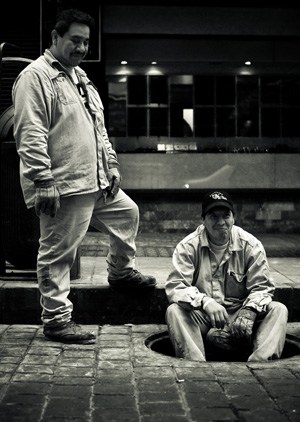
Investing in infrastructure is not busy work

Photo by Eneas/flickr.com

As the smoke clears in San Bruno, Calif., where a gas pipeline exploded, likely as a result of improper maintenance, I’d like to clear up some misunderstandings raised in the comments and e-mails that I received about my last post.

One of my proposals (borrowed from economists both national and local) was that we should help revitalize our economy by applying direct government spending to employ people to fixing our failing infrastructure. Along with others, my fellow columnist Thomas Molitor’s comments likened investing in infrastructure to hiring “one unemployed to dig a ditch and hir(ing) another unemployed to fill it in.”

More than digging a ditch

Many people will recognize that this is an overly-simplistic representation of any serious proposal to repair our crumbling infrastructure. In Molitor’s representation, there is not real work to be done, and the direct government spending would be wasted on what many people call make-work projects. That’s not what I’m talking about, of course. In fact, since we’ve put off improving our infrastructure for so long, there’s plenty of work to do.

Plenty of work to do

The 2009 American Society of Engineers’ Report Card for America’s infrastructure gave us an overall grade of D. They estimate that it would cost $5.5 trillion over the next five years to repair our infrastructure deficiencies.

Here’s how the New York Times summarized the findings:

“More than a quarter of the nation’s bridges are structurally deficient or functionally obsolete. Leaky pipes lose an estimated seven billion gallons of clean drinking water every day. And aging sewage systems send billions of gallons of untreated wastewater cascading into the nation’s waterways each year.”

Here’s a summary of the society’s findings for New Mexico’s infrastructure:

  • 19 percent of New Mexico’s bridges are structurally deficient or functionally obsolete.
  • There are 181 high-hazard dams in New Mexico. A high hazard dam is defined as a dam whose failure would cause a loss of life and significant property damage.
  • 167 of New Mexico’s 398 dams are in need of rehabilitation to meet applicable state dam safety standards.
  • 93 percent of high-hazard dams in New Mexico have no emergency action plan (EAP). An EAP is a predetermined plan of action to be taken including roles, responsibilities and procedures for surveillance, notification and evacuation to reduce the potential for loss of life and property damage in an area affected by a failure or mis-operation of a dam.
  • New Mexico’s drinking water infrastructure needs an investment of $922 million over the next 20 years.
  • New Mexico ranked 10th in the quantity of hazardous waste produced and 44th in the total number of hazardous waste producers.
  • New Mexico reported an unmet need of $15.1 million for its state public outdoor recreation facilities and parkland acquisition.
  • 22 percent of New Mexico’s major roads are in poor or mediocre condition.
  • 19 percent of New Mexico’s major urban roads are congested.
  • Vehicle travel on New Mexico’s highways increased 66 percent from 1990 to 2007.
  • New Mexico has $160 million in wastewater infrastructure needs.

Disasters like the gas pipeline explosion last week and the 2007 I-35W bridge collapse in Minneapolis garnered nationwide attention, but smaller infrastructure failures happen frequently. According to Carl Weimer, executive director of the Pipeline Safety Trust, pipeline failures like the one in California happen every other day. As cities have spread into open spaces, people often don’t know that they live above these pipe systems, 60 percent of which are over four decades old. As of last year some of the piping was still made of wood. It’s clear from the list above that there’s plenty of work to be done in New Mexico and across the nation.

Preparing the way for renewable energy


Advertisement

According to RepowerAmerica,  a clean energy advocacy group, here’s the problem with our energy infrastructure:

“The U.S. electricity transmission and distribution system — or ‘grid’ — is in critical need of an upgrade… The current grid is a series of independently operating regional grids – it can’t meet the needs of a nation whose economy would benefit substantially from the system optimization that comes with national interconnection. Its limitations and vulnerability to failure also reportedly cost the nation $80 billion to $188 billion per year in losses due to grid-related power outages and power quality issues. And most critical to clean energy development, areas rich in renewable resources like solar, wind and geothermal are currently not well-served and thus have no ‘highway’ available to move power outputs to the markets where that power is needed.”

Here’s their solution:

“Modernize and expand the infrastructure for moving electricity from where it is generated to where it is needed through a unified national smart grid. Make that grid ‘smart’ so that it can monitor and balance the load, accommodate distributed energy from local areas and, in the near future, capitalize on a massive national fleet of clean plug-in cars. This new grid encompasses both the long-distance, high-voltage transmission lines and the lower voltage distribution systems that connect the power to customers.”

The above project builds infrastructure that unleashes the growing new energy technologies that will be essential to our energy security in the next century, and puts countless people back to work – hardly digging ditches to be filled in again.

Working together to get back to work

Most of us can’t build the streets that pass in front of our house or place the pipes that run beneath. We need to work together, usually through the auspices of government, to build safe, livable neighborhoods. We live in a time where we, and those who’ve come before, have neglected our public systems. This is dangerous, unwise and wasteful, especially at a time when so many sit on the sidelines unemployed.

Meanwhile, as I’ve argued before, our economy falters under the slow consumption and low consumer confidence caused by our continued high unemployment rate. Far from merely digging ditches only to be filled in again, investment in our faltering infrastructure will put people back to work doing things that need doing, while kick-starting the economy.

Nick Voges is the blogger behind NMPolitics.net’s Zeitgeist. E-mail him at nick@nmpolitics.net.

Tagged as: , ,

11 comments so far. Scroll down to submit your own comment.

  1. Yes, that is my proposal Mr. Moltor. And yes, there are numerous projects I have seen as you describe, in CD3 and CD1 as well as many in Colorado and Calif., guess why. Where are the statesmen who will propose we end the pork, focus on the general public good, and focus taxes to accomplish what needs to be done paid for by those that use the infracstructure? The practice of congressmen being allowed to individually write pork projects with no review or citizen input and vetting must be outlawed. These elected clowns should not have that kind of power over our money and priorities.

  2. @Nick
    Every dollar of government spending must be raised through a dollar of taxation, or the selling of debt to the Federal Reserve Bank (hence, its bloated securities portfolio), or to the world debt market for Treasurys.
    A certain amount of public spending is necessary to perform essential government functions. A certain amount of public works – of streets and roads and bridges and tunnels, of state and county buildings, police, and fire departments – is necessary to supply essential (core) services. With such public works, necessary for their own sake, and defended on that ground alone, I am not concerned. I am concerned with public works considered as a means of “providing employment” (see my Milton Friedman quote.) We raise taxes and that is a redistributive act of transference from the pockets of the private-sector to the coffers of the public sector. Fine. But do you feel like your tax dollars are being managed well and spent efficiently by the government? Enter the creation of the Tea Party movement in early 2009. We have spend tax dollars on foreign entanglements that are costing this county nearly a trillion dollars a year. Are you fine with this application of taxes? Your tax dollars are being spent for massive infrastructure projects: but in Iraq and Afghanistan not in Albuquerque or Hobbs. We just built a billion dollar embassy in Iraq. I don’t think we will be leaving soon. There were billions of taxpayers that disappeared on Rumsfeld’s watch as Sec. of Defense (an Orwellian title if there ever were one) – money that is totally unaccountable and unavailable to be spent on the NM projects you described in your column. So you can see I get a little touchy when I see arguments for more taxes going into the bottomless pockets of the government. It is, in short, legal plunder. As I argued in an earlier email, people spend their own money quite differently than they spend someone else’s.

  3. Thomas,

    Thanks for reading my blog. I appreciate that you’ve ceded that infastructure needs are more than digging ditches to be filled in again.

    As I’ve argued before, the solution to our budget problems are complicated, and I don’t pretend to fully know how to get us out of this mess. I think we’ll need to optimize (or retool, if you’d prefer that frame) government to make sure that it fulfills its role in our society, which I see as creating and enforcing a framework that allows people (and business) to gain freedom and happiness. This includes protecting we the people and the neighborhoods we live in. This may also include participating in long-term investing in infrastructure and new technologies that no single person or business could do alone. Think of the interstate system or the internet — two government driven investments that have created wealth and prosperity for tons of citizens and businesses alike.

    We also need to raise taxes. Instead of repairing failing infrastructure we’ve spent the last 30 years or so lowering taxes. No wonder we can’t afford to fix the things that are falling apart. And yet, despite historically low tax rates, people complain that they’ve been taxed enough already. That’s clearly not true if we can’t even pay for the maintenance of the things we’ve already built.

    Running a big country is expensive. I’m confused by the people that, on one hand, wax on about what a great country we live in but then, on the other hand, complain about having to pony up for their share of the expense. This is a great country to live and in, and I’m happy to pay my share of the bill. If you believe that government can never be made efficient, we may have to agree to disagree on the role of government in facilitating prosperity.

    Thanks!

  4. @Dr. J
    If I understand what you are saying you are suggesting financing the projects on a more local level through tax increases? Prioritize the projects and raise money to finance them through narrow- rather than broader-based taxes (with an emphasis on usage taxes)? Some of the stories I have been reading underscore your point of wasteful public works since the American Recovery and Reinvestment Act handout. Perfectly fine roads getting repaved anyway sort of stories. Have you witnessed such misguided applications of ARRA funds on your travels?

  5. You make perfect sense Mr. Molitor. Buried in my comment is m view that new taxes have to be levied on those that would use these projects to pay for projects that are truly for the public good, efficient and effective, and not just pork to buy votes. I am very familiar with finance and investments. Either you do these projects with debt or equity. I say equity, since I am also painfully aware that the state and feds have spent us into a huge debt hole we can hardly see out of, thus if you do them raise taxes and do them with cash equity. Doing them with debt is insanity given the realities of today’s situation.

  6. @ Dr. J
    I will pose the same question to you that I have to Nick in my comment: Who is going to pay for these public projects and where is the money going to come from since the federal government is bankrupt as are states and municipalities. You guys seem to dodge the financing issue. Basic economics. Are you guys not investors? Do you know how the dollar index is trending right now? Do you know that the Chinese and Japanese are unwinding their positions in US-dominated assets. Why do you think gold has spiked these past few months? Not because of uncertainty. But because of certainty! That the US is going to hell in a handbasket if it continues its Federal Reserve policies. All of this stuff will affect Nick’s state infrastructure wish list above. Help me out guys – am I not making sense to you?

  7. I can agree with many points in this article, but not others. True, we need very badly to improve our national, government operated infrastructure. Replacements of critical infrastructure has been pushed back far too long. However, many projects I witnessed this summer as I traveled the country show the problems. First there are the obvious pork-barrel projects that benefit a few, well placed and politically important constituencies and contractors, like the numerous ones in northern New Mexico and Colorado. There are great ones going on in and around our national parks that benefit the general public and are most welcome and needed, where I would gladly pay higher taxes to see expanded. But this lack of focus and public-good prioritization just show the politics of this and the waste I would not want my tax money paying for. Who will get the politics out and make these infrastructure projects focused and the proper priority? Sorry, not our elected officials and the party in power in DC and Santa Fe. I also think that if you want to do these critical infratstructure projects, do it honesty through increasing taxes that pay for them, like gasoline taxes for example, not by handouts and welfare from the general funds all taxpayers pay through debt. These projects should be funded by those that use them, not the US taxpayers at large. This is the problem with the new Obama plan for new roads, runways, high-speed rail, etc. Just another government giveaway, it should be paid for through taxes and fees from those that use these things. And if you want better electricity grids, allow the utilities to charge their customers for it all, not the taxpayers at large through government handouts.

    And as a person with more than a little experience in pipelines, I think when the investigation is completed on the San Bruno rupture you will find that local, state, and federal government will share blame for allowing right-of-way (usually bought and paid for by the gas companies) encroachment of a city over a high-pressure, long distance transport line that should have been allowed and required to have a wide swath of clear land on top for inspections, replacement, and maintanence. Many states have very strict rules about encroachments, bet Calif. didn’t, only looking for spreading suburban sprawl and their taxing powers. It is impossible to inspect, maintain, and replace lines with house, streets, and other buildings on top of them. Governments can’t blame industry for this.

  8. “It’s clear from the list above that there’s plenty of work to be done in New Mexico and across the nation.”

    You have done some good research on the state’s needs here, Nick, and I agree with your above sentence. My question is, Who is going to pay for all of these public works needs? Where is the money to come from? Are you suggesting Bernanke crank up his printing machine and create a Rooseveltian Newest Deal? He’s pretty busy right now printing fiat currency and debasing the dollar by buying government debt to finance the trillion a year needed in the middle east – as well as to keep interest rates at artificial, farcically low rates. People tend not to spend other people’s money as carefully as they spend their own. That is clear from the mismanagement, duplication, obsolescence, and ineffectiveness of many programs in the federal and state budgets. There is no more persistent and influential faith in the world today than the faith in government spending. Everywhere government spending is presented as a panacea for all our economic ills. Is there unemployment? We can fix it all by more government spending!!! Nick, how are these infrastructure projects you listed above going to be financed?

  9. My favorite Milton Friedman quote:

    “At one of our dinners, Milton recalled traveling to an Asian country in the 1960s and visiting a worksite where a new canal was being built. He was shocked to see that, instead of modern tractors and earth movers, the workers had shovels. He asked why there were so few machines. The government bureaucrat explained: ‘You don’t understand. This is a jobs program.’ To which Milton replied: ‘Oh, I thought you were trying to build a canal. If it’s jobs you want, then you should give these workers spoons, not shovels.’”

  10. @ReenaBob,

    Thanks for reading, and thanks for the clarification. You might be interested in this book, which complicates the findings a little bit and tells more of the story than the government report.

    In the end, I don’t think this diminishes the argument that much of our infrastructure is failing.

  11. Collapse of I-35W Highway Bridge, Minneapolis, Minnesota mentioned in this article was not due in any way to unperformed or delayed maintenance; but rather a design flaw in the bridge at initial construction.

    See http://www.ntsb.gov/publictn/2008/HAR0803.htm,

    Highway Accident Report
    Collapse of I-35W Highway Bridge
    Minneapolis, Minnesota
    August 1, 2007

    NTSB Number HAR-08/03
    NTIS Number PB2008-916203
    PDF Document(3 MB)
    Executive Summary

Leave a response

You must be logged in to post a comment.