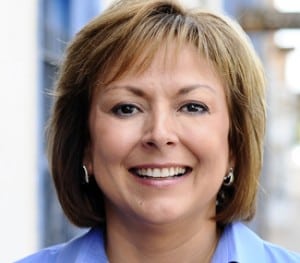
Susana Martinez
Republican gubernatorial candidate Susana Martinez has been quick to point out that the state budget grew 54 percent between fiscal years 2003 and 2009.
But state appropriations to the Third Judicial District Attorney’s Office, which Martinez runs, grew 69.5 percent between FY03 and FY09 – the same time period Martinez is using to attack the “Richardson/Denish” administration for the “out-of-control” growth of 54 percent.
Martinez is quick to say there’s a difference: The increase in funding to her office, her campaign manager told NMPolitics.net, “clearly coincides” with inflation, an increase in cases and the addition of another district judge in Las Cruces during that time.
Meanwhile, Martinez Campaign Manager Ryan Cangiolosi said the 54 percent increase in the state budget was more than twice the rate of inflation and population growth and that the state would have been better off using much of the money to cut taxes. And he was quick to point out that the budget for the office of Lt. Gov. Diane Denish – Martinez’s Democratic opponent – grew 63 percent during the same period, saying it’s “unclear why” that increase was necessary.
I started looking into this issue to find the context for the 54 percent number Martinez was tossing around. What I discovered is that budgetary issues are complicated and there is often more than one way of looking at things.
Martinez’s stance
Martinez’s claim is simple: She contends that if the state hadn’t grown its budget so rapidly from FY03 to FY09, and had instead used that money to cut taxes, New Mexico would be better poised for a recovery from the current economic downturn. Here’s the statement Cangiolosi provided on that point for this article:
“The Richardson/Denish administration grew government by 54 percent, at a rate of over double inflation and population growth. In return for all this new spending, our education system is still failing too many children, New Mexicans have lost 56,900 jobs, and we are currently facing a $183 million budget deficit. Had the Richardson/Denish administration held spending to inflation and population growth and used the additional funds to phase-out job killing taxes, as Martinez has advocated, our economy would be in better shape for an economic recovery with additional revenues as businesses expand, and we would not be facing the same budget deficit.”
Fair enough. The number is accurate. The state budget did grow 54 percent between fiscal years 2003 and 2009 – from $3.895 billion in FY03 to $6.021 billion in FY09. But several news releases from the Martinez campaign and the state GOP about this subject have presented the 54 percent number without mentioning context such as population growth or inflation.
When I started asking the Martinez campaign questions about this topic, however, the responses included the context. The campaign, citing federal statistics, said inflation and population growth added up to a combined 23.5 percent between FY03 and FY09, which is close to my calculation of 24.08 percent.
Meanwhile, state appropriations to Martinez’s office grew from $2.7 million in FY03 to almost $4.6 million in FY09. Here’s Cangiolosi’s full statement on why that was justified:
“With respect to the Third Judicial District Attorney’s office, the increase in appropriations clearly coincides with inflation and the nearly 50 percent increase in caseload and prosecutions – homicide cases, for example, increased by over 133 percent – and a district judge was added by the Legislature, which required additional prosecutorial resources.
“On the other hand, it is unclear why Diane Denish increased spending in her LG office by 63 percent, since she has argued this entire campaign that she has had no responsibility, nor authority, for anything that has happened in this administration over the past seven years.”
Denish spokesman Chris Cervini said this:
“Based on Susana Martinez’s own logic, her office budget increased by roughly 70 percent over the past seven years. That far exceeds the rate that the state budget has increased over that same period of time. Her office budget has increased almost 150 percent since she entered office. So before Martinez launches her next attack, she should take a long look at her own fiscal record. Her own spending has only gone up and up.”
Two years of cuts
There’s more to consider when looking at the growth of the state budget during the Richardson years. FY09 was the high year, but then the economy collapsed. The Legislature and governor made cuts in the FY10 and FY11 budgets. If you consider FY03 to FY10, the state budget grew 46 percent – from $3.895 billion to $5.703 billion (the final, approved budget number after a special session that balanced the budget).
And if you look from FY03 through the current FY11 budget – the last budget approved during the Richardson years – it grew almost 44 percent, from $3.895 billion to $5.604 billion. (The FY09, FY10 and FY11 budget numbers I’m using include temporary state and federal funds used to plug shortfalls and avoid additional cuts.)
This year’s budget remains fluid. In fact, there’s already an estimated $160 million shortfall, and the number could grow.
Keep in mind that, according to the federal numbers I looked up, inflation and population growth added up to 24.08 percent between FY03 and FY09. Inflation was 16.6 percent, using the consumer price index, and, according to the Census estimate, population growth was 7.48 percent. I’m going to very roughly estimate (because there’s no other way to do it) that inflation and population growth will add up to about 30 percent during Richardson’s tenure.
So it appears to be safe to say that the state budget grew faster than inflation and population growth during the Richardson years – even when considering the FY10 and FY11 budget cuts. Martinez’s and Denish’s office budgets also grew more quickly than inflation and population growth.
Different ways of looking at things
Some say budgets should grow more rapidly than population growth and inflation because those basic numbers don’t account for more complex factors – including the reality that health-care costs rise much more quickly than the consumer price index, or, in Martinez’s case, the increase in cases to prosecute. Others say government is so bloated that we need a zero-growth policy: No increases, regardless of factors such as inflation and population growth.
I can follow Martinez’s logic in why she is talking about state budget growth in terms of FY03 to FY09: The cuts the state has made in the two budget years that followed came out of necessity, not because the majority of our state’s political leaders sought to cut the size of government and reduce taxes to stimulate economic growth. Martinez’s argument is that if we’d cut taxes instead of growing government so rapidly from FY03 to FY09, when we had a choice, we wouldn’t have fallen as far and would have recovered more quickly.
I can also follow the logic of those who say budgets go up and down with the economy: You grow when you can afford it – such as raising teacher salaries and appropriating money for a spaceport and commuter rail early in the Richardson years – and cut (or, depending on who’s in charge, raise taxes) when you can’t – which is what has happened the last two years. Following that logic, it might make sense to consider the entirety of Richardson’s tenure, rather than only the years in which the state could afford to grow.
In other words, there are different ways of looking at the issue.
Regardless, the budgets of the offices run by both candidates for governor have joined the state budget in growing faster than the combined rate of inflation and population growth. Martinez’s explanation for why she believes her office’s budget increase was justified while the others were not is one viewpoint on the situation.
Budgets are complicated and fluid. There will be other viewpoints.
This article has been updated to include Cervini’s comment.