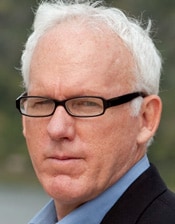
Thomas Molitor
He may not look like Spike Lee but he’s doing the right thing.
Every state, county and city faces the same tough challenge: trying to find ways to cut costs without compromising city services in what appears to be a predictably long era of declining revenues.
Albuquerque Mayor Richard Berry announced last Friday that he will reduce wages for thousands of city employees to help balance this year’s budget.
These past few months Mayor Berry has had grinding headlock sessions with the city’s seven labor unions that qualify him to wear the World Wrestling Entertainment title belt. Albeit, these matches are real, not choreographed, and are anything but entertaining.
Mayor Berry also announced Friday that his administration has reached agreements with two of the AFSCME bargaining units and has implemented a wage reduction for the remaining three.
Earlier this month, Mayor Berry announced wage reductions for the fire and police unions. The 2.47 percent reduction for the fire union was implemented after mediation failed to produce a resolution with the Albuquerque International Association of Firefighters Local 244. All Albuquerque Police Officers’ Association members received a 2.41 percent reduction after a mediation failed to produce an agreement between the union and the city.
Along with the salary reductions, all city employees will pay 20 percent of their health insurance contributions. Previously, city employees were paying 17 percent.
Incidentally, the mayor and the city councilors all took 5 percent pay reductions.
Mayor Berry is doing the right thing.
Why the whining?
Joey Sigala, the president of the police union, said he’s already received calls from officers who say “they would rather retire early and look for higher-paying jobs than take pay cuts.” Evidently, the same attitude prevails over at the firefighters local.
Excuse me. What planet do these union members live on? They work for 20 years and get 90 percent of their top three years’ earnings as a pension for the rest of their lives and they whine?
When I was running in the primary for state representative earlier this year I knocked on 2,000 doors, and let me tell you that many a door was answered by an unemployed, private-sector, nonunion electrician, plumber, drywaller, painter and carpenter who would relish a 2.47 percent reduction in his or her wages. Most small businesses have seen 40 percent drops in revenues in their line of work.
And none of them are in line to get a 90 percent of top earning years’ pension after 20 years of service.
By the way, what “higher-paying jobs” are the police officers and firefighters threatening to switch to? We have a nearly 10 percent unemployment rate, 20 percent really if the true, broader definition of unemployment is applied. If police officers and firefighters know of some magic Internet job posting site that lists a plethora of “higher-paying jobs,” please, send me its website address. You can contact me at my e-mail address below.
Killing the economy
Former New Mexico Attorney General Hal Stratton has done a lot of ongoing work educating people on the history of the public-sector job growth and its exploding costs to taxpayers and subsequent generations who have to fund pensions.
Mr. Stratton points out that for the first time ever, in 2009 a majority of union members are now in the public sector. This explosion of public-sector employment is killing the economy. For starters, public employees cost too much. The one part of the economy that is going gangbusters during this great recession is government work.
According to Recovery.gov, most of the 595,000 jobs that have been created or saved by the stimulus package have been in the public sector, with over two-thirds going to education.
The growth of government is nothing short of exponential. Take, California, for example. Mr. Stratton’s recent study cites that in 1960, there were 874,000 government jobs in California. In 1980, there were 1.6 million government jobs. In 1990, government jobs grew to 2.1 million. Teachers’ unions have grown from 170,000 to 340,000 in California.
In 2008, California had an unfunded pension liability of $63 billion.
What’s more, in the past 10 years, taxpayer contributions to the state pension system have increased by 2,000 percent. The state had to issue IOUs when it ran out of money.
California dreaming has become taxpayer reaming, with the state now over $20 billion in the red.
On the federal level, federal workers make about $8,000 more than their counterparts in the private sector in straight salary. And they make about $30,000 more in health, pension and other fringe benefits.
According to the Bureau of Labor Statistics, the private sector has cut more than 8 million jobs since the recession started in December 2007. Over the same time period the public sector actually saw a net gain of at least 100,000 jobs.
In addition, because the public-sector gets its money from taxpayers, everything it gains means less money for the rest of us. Less money to invest, to create jobs, or to save.
Time to cut public-sector payrolls
The bottom-line reality is, with the federal government and most states deeply in the red, it’s time to cut public-sector payrolls and return more revenue to the private sector. That will generate more economic growth, which will help end this recession sooner than paying higher taxes for these government salaries.
As economist Henry Hazlitt opined many years ago, “The art of economics consists in looking not merely at the immediate but at the longer effects of any act or policy; it consists in tracing the consequences of that policy not merely for one group but for all groups.”
The unions and city workers needn’t take the pay cuts personally as though they are being singled out as a group. Raising pay may benefit one group but it may disadvantage many other groups – especially future generations.
Mayor Berry is doing the right thing.
Molitor is an adjunct scholar at the Rio Grande Foundation and a regular columnist for this site. You can reach Molitor at tgmolitor@comcast.net.
Molitor bio │ Archives │ Feed